Fed’s “Modestly Restrictive” Rates: What It Means for Tangible Assets
But history suggests moments like this deserve closer scrutiny, not complacency. Periods when central bankers project confidence often coincide with subtle shifts in risk rather than its disappearance. For investors whose portfolios remain concentrated in equities, rate-sensitive assets, or growth narratives tied to policy expectations, “modestly restrictive” can be a deceptively dangerous phase.
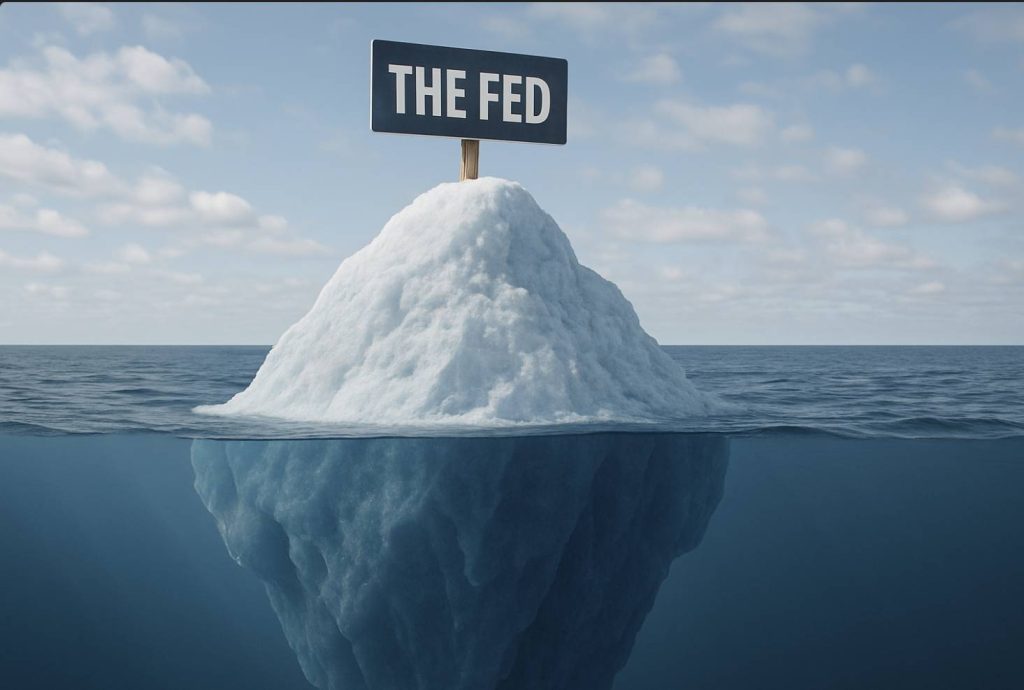
What “Modestly Restrictive” Really Signals
Markets tend to hear something simpler: the worst may be over.
That interpretation matters because asset prices are driven less by where rates are today and more by how investors position themselves for what comes next. When optimism about future growth builds, risk often migrates quietly rather than exiting portfolios altogether.
Equities that have already rallied on rate-cut expectations can become increasingly sensitive to disappointment. Bonds remain exposed to duration risk if inflation reaccelerates. Real estate continues to feel pressure from financing costs that are still historically elevated.
In other words, “modestly restrictive” does not eliminate risk. It redistributes it.
The Portfolio Blind Spot for Retail Investors
Traditional diversification strategies tend to rely on assets that are still linked to the same macro drivers. Stocks, bonds, REITs, and even many alternatives ultimately depend on interest rate policy, economic growth assumptions, or financial market liquidity. When those variables shift together, correlations rise precisely when protection is needed most.
The Fed’s confidence can reinforce the illusion that diversification is already working, even when portfolios remain exposed to the same underlying forces.
This is where periods of apparent stability become structurally important. Risk is rarely obvious when central bankers sound measured and markets are orderly. It accumulates quietly in portfolios built around expectations rather than independence.
Why Tangible Assets Behave Differently
Assets that operate outside monetary policy cycles tend to behave differently during these transitions.
Investment-grade tangible assets derive value from scarcity, provenance, and long-term demand rather than from rate expectations or GDP forecasts. Their performance is not dependent on whether policy becomes slightly more accommodative or remains modestly restrictive for longer than expected.
Collector automobiles are a clear example. Values are driven by fixed production numbers, historical significance, and global collector demand. These factors are not influenced by Federal Reserve language or forward guidance.
While financial markets reprice narratives, tangible assets continue to trade on fundamentals that are permanent rather than cyclical.
MCQ Markets and Portfolio Independence
This distinction is central to why many investors turn to alternative assets during moments like the current one.
MCQ Markets provides access to investment-grade collector cars through a fractional ownership model designed for retail investors seeking diversification without the complexity of direct ownership. Each vehicle is professionally acquired, authenticated, insured, and stored, removing the traditional barriers associated with this asset class.
Most importantly, these assets are structurally independent. Their value does not hinge on whether rates fall in six months or twelve. They are not repriced daily based on Fed commentary. They exist outside the feedback loop that ties most traditional portfolios to monetary policy expectations.
As the Fed signals comfort and markets interpret stability, this independence becomes increasingly valuable.
Looking Ahead
The question for investors is not whether the Fed is right or wrong. It is whether their portfolios rely too heavily on the same assumptions the market is already pricing in.
Periods when central banks sound calm are often when diversification matters most.