Young Supercar Collectors: Why a New Generation Is Investing in Automobiles
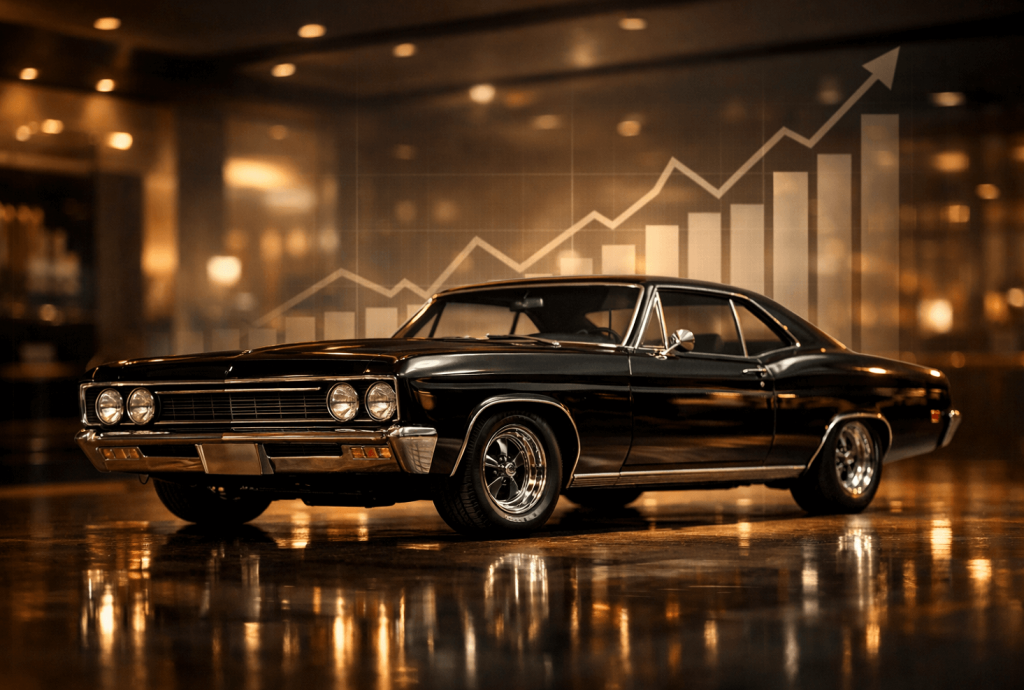
The Wynn Las Vegas hosted 600 supercars and hypercars valued at a combined $1.1 billion this month, showcasing a fundamental shift in collector car demographics as younger enthusiasts transformed what was once considered a hobbyist pursuit into a recognized alternative investment asset class commanding institutional attention and delivering consistent appreciation potential. The concours event attracted hundreds of owners in their twenties, thirties, and early forties who brought Bugattis, Ferraris, Koenigseggs, and Paganis to the luxury resort, with many demonstrating willingness to actually drive their six-figure and seven-figure vehicles rather than maintain them as pristine garage assets with artificially restricted mileage. McKeel Hagerty, CEO of Hagerty Inc., noted that supercars represented the most difficult segment in the automotive insurance industry because they were often driven by people unfamiliar with their capabilities, yet this younger generation of collectors was eager to embrace these vehicles despite maintenance costs exceeding $8,000 for Pagani servicing and approaching $25,000 for Bugatti care. The demographic transformation highlighted how collector automobiles evolved from niche enthusiast holdings into tangible alternative assets that sophisticated investors recognized for portfolio diversification potential, with the global classic car market valued at approximately $31.1 billion in 2025 and projected to reach $51.3 billion by 2028 representing an 8.7% compound annual growth rate. This evolution demonstrated why prudent investors increasingly allocated capital to automotive collectibles that appreciated independently of traditional equity market cycles, offering genuine portfolio protection during periods when stock market concentration risks and economic uncertainty created systematic vulnerabilities across conventional investment holdings that lacked tangible asset backing and alternative return drivers.
The concours event revealed critical insights about collector car market maturation that validated the asset class’s investment credibility beyond traditional enthusiast communities. While younger collectors like 24-year-old Jack Morris put 16,000 miles on his 2009 Lamborghini Murcielago LP 640 since purchasing it two years ago and Nicole Villa modified her 2017 Lamborghini Huracan for drag racing after buying it with savings from working as a cocktail waitress in elite Vegas clubs, their approach demonstrated that appreciation potential coexisted with actual vehicle usage rather than requiring hermetically sealed storage conditions. However, the more significant development for long-term portfolio construction centered on auction performance data that showed six of the top ten lots sold at the Broad Arrow auction during the Vegas concours were supercars made after 2006, with a 2010 Bugatti Veyron EB 16.4 Coupe fetching a record $2.2 million while demonstrating that modern supercars appreciated substantially beyond their original purchase prices. This pattern occurred as manufacturers expanded production volumes while maintaining exclusivity, with Ferrari delivering record annual sales exceeding 13,700 vehicles globally in 2024 encompassing six main models plus multiple special editions compared to just four models in 1995, and Porsche delivering more than 50,000 units of its 911 sports car alone in 2024 across more than 20 variants. The combination of rising production numbers, younger collector demographics, and consistent auction appreciation reinforced why sophisticated investors recognized collector automobiles as legitimate alternative assets worthy of portfolio allocation percentages previously reserved for real estate, commodities, or private equity holdings that shared similar tangible asset characteristics and alternative return patterns operating independently of traditional stock and bond market dynamics.

This Article Covers:
- How younger supercar collectors validated collector cars as legitimate alternative investment asset class
- Why investment portfolios require structural diversification beyond traditional equity and fixed income holdings
- The systematic advantages created by tangible assets that appreciate independently of stock market cycles
- How collector car investments provide portfolio stability during equity market volatility and economic uncertainty
- Why MCQ Markets offers accessible fractional ownership entry points to investment-grade automotive assets
Collector Car Asset Class Evolution: Demographics and Investment Validation
The market dynamics demonstrated how collector car appreciation patterns validated investment thesis beyond subjective enthusiasm. Ron Sturgeon, a Dallas entrepreneur who brought his Bugatti Veyron to Vegas, emphasized that younger collectors pervaded rally events and needed to be attracted to sustain market vitality, with the demographic shift creating sustained demand patterns that supported appreciation trajectories independent of broader economic cycles. Doug Cohen, who brought his 1981 Lamborghini Countach to the concours, called supercars the most exciting segment in collecting currently while acknowledging that participants shared unconventional mindsets, demonstrating how passionate collector bases created market stability through enthusiast demand rather than purely speculative investment motivations.
Alternative asset performance reflected institutional recognition of collector car investment credibility. Industry data showed the global classic car market valued at approximately $31.1 billion in 2025 with projections reaching $51.3 billion by 2028, representing an 8.7% compound annual growth rate that outpaced numerous traditional investment categories while maintaining minimal correlation with equity market fluctuations. The performance validated decades of appreciation history, with examples like the 1956 Mercedes-Benz 300SL Gullwing Coupe demonstrating that a $9,000 initial investment would yield approximately $3.4 million currently, slightly outpacing the same investment in the S&P 500 growing to approximately $3.28 million over the identical period.
The demographic evolution pattern highlighted fundamental shifts in alternative asset allocation approaches when younger collectors implemented substantial capital commitments toward automotive investments. When millennials and Gen Z participants saved earnings from gaming content creation or cocktail waitressing to acquire six-figure supercars they planned to drive regularly rather than preserve with restricted mileage, the implications extended beyond individual purchasing decisions to systematic market maturation that created sustained appreciation potential through expanding collector bases and evolving ownership philosophies that prioritized experiential value alongside financial return expectations.
Portfolio Diversification: Tangible Asset Allocation Benefits
Traditional portfolio concentration created significant challenges across multiple dimensions. The investment landscape’s dependence on stock market performance, economic growth assumptions, interest rate trajectories, and corporate earnings sustainability created interconnected risk factors that simultaneously affected multiple conventional holdings. When equity markets experienced volatility through technology sector concentration concerns, economic cycle uncertainties, or monetary policy shifts, the market impact extended across growth stocks, value equities, dividend payers, and index funds that shared similar dependencies on macroeconomic conditions and corporate profitability patterns that moved in correlated directions during market stress periods.
The tangible asset advantage extended beyond individual investment characteristics into broader portfolio stability benefits. Collector automobiles provided appreciation potential driven by manufacturing scarcity, historical significance, brand heritage, and collector demand fundamentals that operated completely independently of Federal Reserve policy decisions, quarterly earnings reports, or macroeconomic data releases that drove traditional stock market valuations. The Hagerty Blue Chip Index tracking investment-grade collector automobiles demonstrated this independence by outperforming the S&P 500 over seventeen-year measurement periods while maintaining minimal correlation with equity market dynamics, providing genuine diversification rather than simply adding another correlated equity sector exposure.
The implications for sophisticated investors proved substantial. While traditional stock and bond portfolios historically provided growth and income characteristics, the market’s increasing concentration in technology sectors and systematic correlation patterns during volatility periods created portfolio challenges that became more pronounced without alternative asset diversification. Financial advisors increasingly emphasized that when conventional equity holdings dominated portfolio allocations without tangible asset complementation, the systematic exposure to market cycle risks and correlation dynamics required asset allocation strategies that operated independently of stock market performance through alternative investments offering different return drivers and appreciation fundamentals.
Investment professionals increasingly recommended collector car allocation approaches that reduced correlation with traditional portfolio risks, particularly for clients whose existing wealth derived primarily from equity-concentrated holdings with substantial market sensitivity exposure. The collector automobile market represented an ideal alternative investment category, offering appreciation potential completely divorced from stock market valuations, corporate earnings patterns, or economic cycle dependencies that drove traditional portfolio performance and created systematic vulnerability during periods of equity market concentration and macroeconomic uncertainty that characterized contemporary investment environments.
Market Validation: Auction Performance and Appreciation Fundamentals
The investment credibility demonstrated by younger supercar collectors and consistent auction results reinforced why collector automobiles achieved recognition as legitimate alternative assets worthy of portfolio allocation consideration. The Broad Arrow auction during the Vegas concours provided concrete validation through price realization data that demonstrated sustained appreciation potential across multiple vehicle categories and production eras.
Auction performance metrics validated collector car investment thesis through quantifiable results:
Recent Production Appreciation: Six of the top ten auction lots sold were supercars manufactured after 2006, demonstrating that appreciation potential extended beyond vintage classics to include modern performance vehicles that combined contemporary engineering with limited production characteristics creating scarcity value.
Record Price Achievement: The 2010 Bugatti Veyron EB 16.4 Coupe achieved a record $2.2 million sale price, substantially exceeding original purchase prices and demonstrating consistent appreciation trajectories for flagship hypercar models that represented manufacturer pinnacle achievements and limited availability characteristics.
Market Depth Indicators: The 600-vehicle concours totaling $1.1 billion in combined value demonstrated substantial market depth with hundreds of collectors willing to transport, display, and actively use high-value automotive assets, creating liquidity and price discovery mechanisms that supported investment-grade asset classification.
MCQ Markets: Democratizing Access to Investment-Grade Collector Cars
While traditional collectors navigated six-figure and seven-figure purchase requirements that restricted participation to high-net-worth individuals, MCQ Markets provides sophisticated investors with accessible entry points to collector car investments that deliver appreciation potential comparable to traditional whole-vehicle ownership. Our fractional ownership platform transforms investment-grade automobile access, allowing investors to build positions in rare vehicles whose values derive from manufacturing scarcity, brand heritage, and collector demand fundamentals rather than traditional market factors.
MCQ Markets eliminates capital barriers through innovative fractional ownership structures that democratize premium automotive investing. Traditional collector car acquisition required substantial upfront commitments often exceeding $100,000 for entry-level investment-grade vehicles and reaching multiple millions for flagship supercars and hypercars like those displayed at the Wynn concours, effectively restricting participation to wealthy individuals capable of allocating significant capital percentages to single alternative assets. Our platform removes these obstacles by offering fractional shares in curated investment-grade automobiles, enabling everyday investors to participate in an asset class that demonstrated consistent appreciation over extended periods while maintaining minimal correlation with traditional equity market dynamics.
Professional asset management capabilities distinguish MCQ Markets from traditional collector car ownership challenges. Beyond capital requirements, whole-vehicle ownership necessitated specialized knowledge spanning authentication verification, condition assessment, maintenance scheduling, storage facility management, and insurance coverage procurement that collectively created operational complexities deterring many potential investors despite recognizing appreciation potential. Our platform handles comprehensive asset management including climate-controlled storage in our purpose-built Miami facility maintaining optimal environmental conditions, expert maintenance executed by experienced technicians with vintage and exotic vehicle expertise, comprehensive insurance coverage with agreed-value policies protecting full investment value, and strategic hold decisions informed by market analysis and collector demand patterns that maximized appreciation potential through optimized acquisition timing and disposition strategies.
Market performance data validates collector car investment approaches across multiple measurement periods and vehicle categories. The Hagerty Blue Chip Index tracking investment-grade collector automobiles delivered consistent appreciation over seventeen-year periods while outperforming the S&P 500 and maintaining minimal correlation with traditional equity sectors, demonstrating that automotive collectibles provided genuine diversification benefits rather than simply adding another correlated asset class to conventional portfolios. This independence from stock market performance made collector cars particularly valuable for investors seeking stability during periods of equity market volatility, economic uncertainty, and systematic correlation increases that characterized contemporary financial market environments.
Our curated vehicle selection focuses on investment-grade automobiles with documented appreciation histories and strong collector demand fundamentals spanning multiple categories. The portfolio includes limited-production supercars from manufacturers like Ferrari, Lamborghini, and Porsche that represented engineering pinnacle achievements during their production eras, historically significant racing models with documented competition provenance from events like Le Mans and Formula 1 championships that commanded premium valuations from enthusiast collectors, and manufacturer milestone editions commemorating important corporate anniversaries or technological breakthroughs that created collectible status through historical significance. Examples include vehicles like the 2012 Lexus LFA with only 500 units produced globally that recently achieved auction sales reaching $951,000 representing substantial appreciation from its original $375,000 manufacturer price, demonstrating how limited production numbers combined with engineering excellence created sustained appreciation trajectories independent of broader economic conditions.
The fractional ownership structure enables portfolio diversification within the alternative asset class itself through multi-vehicle positions spreading risk across different manufacturers, production eras, and collector market segments. This approach provided additional stability compared to single-vehicle concentration while maintaining complete independence from traditional equity market dynamics and economic cycle sensitivities. Our experienced management team ensures professional handling protecting investment value through proper storage protocols maintaining precise temperature and humidity parameters, comprehensive maintenance programs addressing both mechanical function and cosmetic preservation, and market-informed strategies maximizing appreciation potential through strategic timing of both acquisition decisions targeting undervalued opportunities and disposition approaches capitalizing on collector demand cycles when market conditions optimized realization values.
MCQ Markets delivers complete independence from stock market cycles, economic uncertainties, and traditional portfolio correlation patterns that created systematic risks in conventional equity holdings. Collector car appreciation remained unaffected by Federal Reserve policy decisions, quarterly earnings reports, or macroeconomic data releases, offering genuine portfolio stability during periods of equity market pressure and economic volatility that affected traditional investment performance. Our SEC-qualified Regulation A offering structure provides regulatory clarity and investor protection while maintaining operational flexibility to source and manage exceptional automotive assets that appreciated based on collector market fundamentals including manufacturing scarcity, brand heritage, historical significance, and enthusiast demand patterns rather than traditional financial market considerations or macroeconomic cycle dependencies.
Investment Outlook: Alternative Assets and Portfolio Construction Evolution
The Wynn concours event demonstrating $1.1 billion in supercar valuations and resulting younger collector demographic patterns, coupled with consistent auction appreciation and expanding market projections reaching $51.3 billion by 2028, created valuable insights for investors managing portfolio construction in contemporary financial environments. The younger generation’s willingness to allocate substantial capital toward automotive investments despite maintenance costs and operational complexities demonstrated why building resilient portfolios required alternative assets that maintained value regardless of stock market dynamics or economic cycle fluctuations.
The demographic transformation affected operations across collector communities, auction market structures, and manufacturer production strategies, demonstrating how sustained demand patterns created broad-based impacts that extended beyond individual vehicle transactions to entire alternative asset categories during periods of equity market maturation and investor sophistication evolution. This systematic recognition highlighted the importance of tangible asset allocation that operated independently of traditional portfolio dynamics, stock market competitive structures, and conventional correlation dependencies that characterized equity and fixed income holdings.
MCQ Markets addresses this diversification imperative by providing institutional-quality access to collector car investments through our proven fractional ownership platform backed by professional asset management capabilities and regulatory compliance structures. Our investment approach allows equity-concentrated investors to build positions in investment-grade automobiles while maintaining expert oversight during market volatility periods and economic uncertainty cycles. The platform’s focus on automotive assets with appreciation potential driven by scarcity, heritage, and collector demand rather than traditional market outcomes provides portfolio protection when conventional equity holdings face systematic pressure from correlation increases and economic cycle sensitivities.
As collector car market evolution continues and younger demographics validate the asset class through sustained capital allocation, investment-grade automobiles continue operating in markets driven by manufacturing rarity and brand heritage rather than stock market dynamics or macroeconomic patterns. This fundamental independence makes collector cars particularly valuable for investors seeking portfolio stability during periods of equity market concentration and traditional asset correlation intensification that characterize contemporary investment environments increasingly influenced by systematic risk factors and conventional portfolio vulnerabilities rather than diversified alternative asset strategies incorporating tangible holdings with independent appreciation drivers and minimal correlation characteristics.